
The Nigerian Market: Complexity and Opportunity
The Nigerian market is unique. Conversations often focus on its unpredictability and the extraordinary economic volatility that shapes the business landscape. The high cost of operations, expensive capital, and infrastructural deficiencies regularly dominate discourse.
While these issues are well documented and significant, my growing fascination lies with the evolving attitudes of Nigerian consumers—both individuals and businesses—within this complex environment.
Creative Industry: Shifting Consumer Perceptions
Today, Nigeria's creative industry stands as a global phenomenon. Nigerian fashion, music, art, and tourism have garnered widespread acclaim. As the industry has evolved, I am compelled to consider the influence of consumer attitudes on this rise to global prominence.
For instance, Adenike Ogunlesi once recounted how, when she founded Ruff and Tumble, the local market was hesitant to purchase high-quality children's pyjamas made in Nigeria. Similarly, Joycee Awosika was advised that scaling Oriki—a wellness business with spas—would require expatriate therapists.
Yet today, Ruff and Tumble's children's apparel is sold across Nigeria, Nigerian fashion enjoys international recognition, and Oriki has expanded its footprint across Nigeria, and beyond by employing local talent.
Local Value vs. Foreign Preference
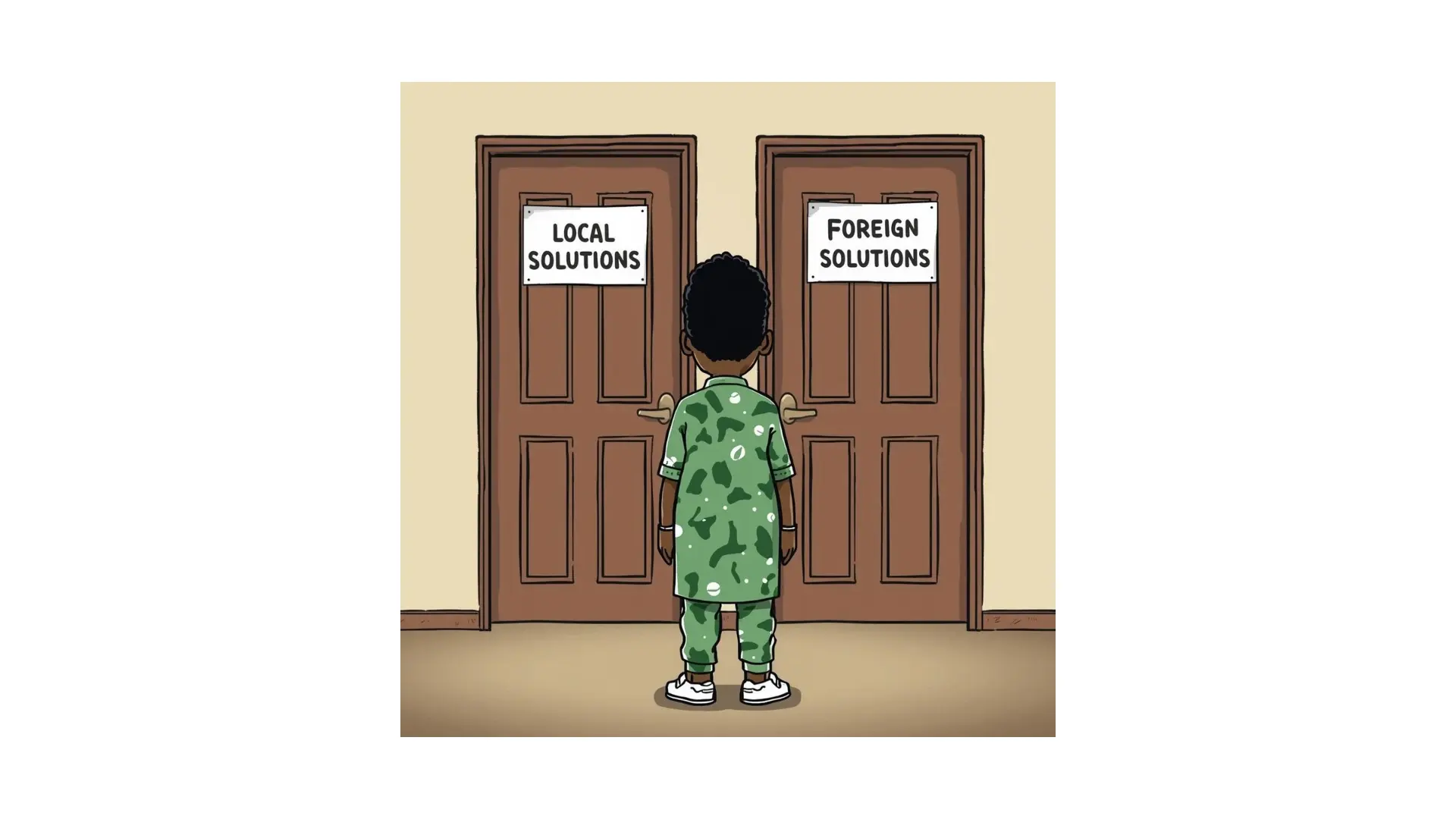
A recurring theme in both stories is a persistent bias towards foreign solutions. Recent shifts in consumer attitudes may be influenced by global market realities. The decline in the Naira's value against major currencies has made foreign products and services less accessible.
For example, employing only expatriate therapists would significantly increase operational costs for spas. This economic reality has also transformed the ready-to-wear fashion market, prompting both Nigerians and foreigners to view locally made apparel as offering better value than foreign alternatives.
Digital Solutions and the Persistence of Doubt
Yet, in the digital solutions sector, an inferiority complex remains prominent. Nigerian software engineers are in high demand worldwide, but locally developed solutions often face scepticism at home.
While the widespread adoption of fintech products might suggest a shift in perception, this is not entirely accurate—many such solutions succeeded initially because there were no viable international alternatives at the time.
One must wonder: had global giants addressed our local payment challenges, would the market have favoured their offerings over homegrown innovations?
Rethinking Priorities: Embracing Homegrown Solutions
At its core, business is about solving problems, which might not be peculiar to a geographic location—a universal principle that explains why multinational companies can thrive across different markets. Seeking solutions beyond our borders is both rational and often necessary.
However, what concerns me is our persistent tendency to default to foreign solutions, not due to a shortage of capable local alternatives, but out of an ingrained inferiority complex. In my interactions with Nigerian businesses on digital solutions, a familiar pattern emerges: imported solutions prove too complicated, customer support is remote or absent, pricing is prohibitive, and repeated attempts to make them work often end in disappointment. Yet, only after exhausting these foreign options do we reluctantly consider homegrown innovations, which are consistently held to a higher standard.
The critical question we must ask is: how sustainable is it to continually overlook accessible, locally developed solutions simply because they are not imported? This institutionalised self-doubt is costing our economy dearly—both in lost value and in missed opportunities for transformative breakthroughs. Dare I say, the conversation should not be limited to seeking excellence within our shores, but also to exporting our excellence abroad. After all, why should anyone believe in us if we do not believe in ourselves?